Key points
- Nitric oxide supplements reliably raise blood flow markers at research doses
- Cerebral autoregulation means a healthy brain resists changes to its own blood supply
- No published trial shows NO supplements improve memory or recall in healthy adults
- VapoCept is built on this mechanism, which is why the claim gap matters
The mechanism, stated fairly
The argument runs: brains need blood, blood carries oxygen and glucose, nitric oxide widens blood vessels, so a nitric oxide supplement should mean a better-supplied and therefore better-functioning brain. Every individual step in that chain is real physiology.
Nitric oxide is a genuine signalling molecule. It is produced from L-arginine by nitric oxide synthase. It causes vascular smooth muscle to relax. The 1998 Nobel Prize in Medicine went to the researchers who worked this out, and nitrate drugs for angina exploit the same pathway. None of this is fringe science.
Where the chain breaks
The weak link is not the chemistry. It is the assumption that increasing systemic nitric oxide increases cerebral blood flow, and that increasing cerebral blood flow improves cognition in someone whose cognition is already normal.
The brain has a protective mechanism called cerebral autoregulation. It maintains its own perfusion at a roughly constant rate across a wide range of systemic blood pressures. This exists precisely so that brain blood supply does not fluctuate with whatever the rest of the circulation is doing — standing up, exercising, digesting a meal.
That means a healthy brain actively resists the thing these supplements are trying to do. It is not short of blood and it will not simply accept more.
What the trials actually measured
Search the literature on citrulline and arginine supplementation and you find a substantial body of work. Almost all of it measures one of three things: blood pressure, endothelial function (usually via flow-mediated dilation), or exercise performance.
Those are the outcomes researchers chose because those are the outcomes the mechanism plausibly affects. Cognitive endpoints are rare, and where they appear they are typically in populations with existing vascular compromise, not healthy adults.
This is worth understanding as a general principle: when a supplement is sold for outcome X but all its cited research measured outcome Y, the citations are decoration.
Where blood flow genuinely matters for cognition
There is a real clinical entity called vascular cognitive impairment, where compromised cerebral circulation does affect thinking. It is diagnosed by physicians, investigated with imaging, and managed with blood pressure control, diabetes management, smoking cessation and sometimes antiplatelet therapy.
If you have this, you need that pathway, not a capsule with undisclosed amounts. And if you do not have it, the mechanism does not apply to you.
See all six ingredients analysed
Every VapoCept ingredient rated against the published research for its own best-documented use.
Ingredient breakdownWhat this means for VapoCept specifically
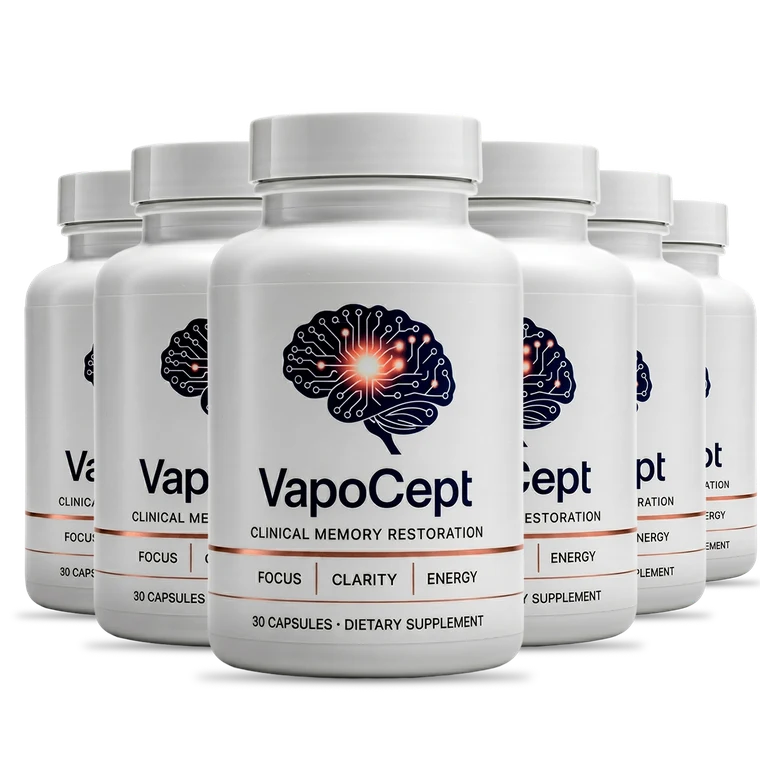
VapoCept is built entirely on the nitric oxide argument. Four of its six ingredients — L-arginine, L-arginine AKG, L-citrulline HCl and L-citrulline malate — exist in the formula to raise nitric oxide. Its marketing describes increasing cerebral blood flow to reduce 'blanks' when recalling names.
So the formula stands or falls on a link the literature does not support in healthy people. That is before you get to the dose question, which is covered in our ingredient analysis: no amounts are published, and one capsule cannot hold research doses of six ingredients.
What has better evidence for cognition
If cognitive support is the goal, the compounds with actual cognitive literature are different ones entirely. None is a miracle and the evidence for all of them is mixed, but it at least concerns cognition:
- Creatine monohydrate — studied for cognitive performance under sleep deprivation and in vegetarians, where baseline stores are lower.
- Omega-3 (DHA/EPA) — a large literature, with modest and inconsistent effects.
- Citicoline — some trials in age-related memory complaints.
- Bacopa monnieri — trials on memory acquisition over 8–12 weeks.
- Caffeine with L-theanine — well studied for attention, short-acting.
And beneath all of them: sleep, cardiovascular exercise, hearing correction and treating depression have larger effect sizes on cognition than any supplement.
Frequently asked
Does nitric oxide help brain fog?
There is no trial evidence that nitric oxide supplements resolve brain fog. Brain fog is a symptom with many causes including poor sleep, thyroid dysfunction, medication side effects and depression, none of which is addressed by vasodilation.
Is citrulline better than arginine?
For raising plasma arginine and nitric oxide, yes. Oral arginine is largely broken down by arginase before it reaches circulation, while citrulline bypasses this and is converted to arginine in the kidneys. This is well established and is why sports formulas moved to citrulline.
Are nitric oxide supplements safe?
For most healthy adults, at reasonable doses, they are generally well tolerated. They are not safe to combine casually with nitrate medication or PDE5 inhibitors, which act on the same pathway and can compound blood pressure lowering. Check with a pharmacist if you take any cardiovascular medication.