Key points
- Beta-alanine's evidence base is strong and specific to skeletal muscle
- It buffers acid during efforts lasting one to four minutes
- Human brain carnosine elevation from oral beta-alanine is not established
- The tingling it causes is harmless and easily mistaken for the product working
What beta-alanine actually does
Beta-alanine is the rate-limiting precursor to carnosine, a dipeptide stored in skeletal muscle. Supplementing it raises muscle carnosine substantially over four to ten weeks of consistent daily intake.
Carnosine buffers hydrogen ions. During high-intensity effort, hydrogen ion accumulation contributes to the burning sensation and to performance decline. More carnosine means more buffering, which is why beta-alanine improves performance in efforts lasting roughly one to four minutes — rowing, middle-distance running, repeated sprints.
This literature is genuinely solid. Beta-alanine is one of a small number of supplements with consistent, replicated performance effects.
The dose that produces those effects
Research protocols use 3.2 to 6.4 grams daily, split into doses to manage the tingling, sustained for four weeks or more before muscle carnosine rises meaningfully.
That figure matters when assessing any product containing beta-alanine. A single capsule holds roughly 500 to 800 milligrams of total powder. If beta-alanine is one of six ingredients in one daily capsule, it is present at a small fraction of the researched dose.
The brain carnosine claim
Carnosine does exist in brain tissue and has antioxidant properties in vitro. From that, supplement marketing builds the claim that beta-alanine protects neurons from age-related damage.
The step being skipped is whether oral beta-alanine actually raises brain carnosine in living humans. The blood-brain barrier is selective, brain carnosine metabolism differs from muscle, and the human evidence for meaningful elevation is not there.
This is a common pattern: take an ingredient with strong evidence in one tissue, note that the molecule also exists in another tissue, and market the second as though the first proved it.
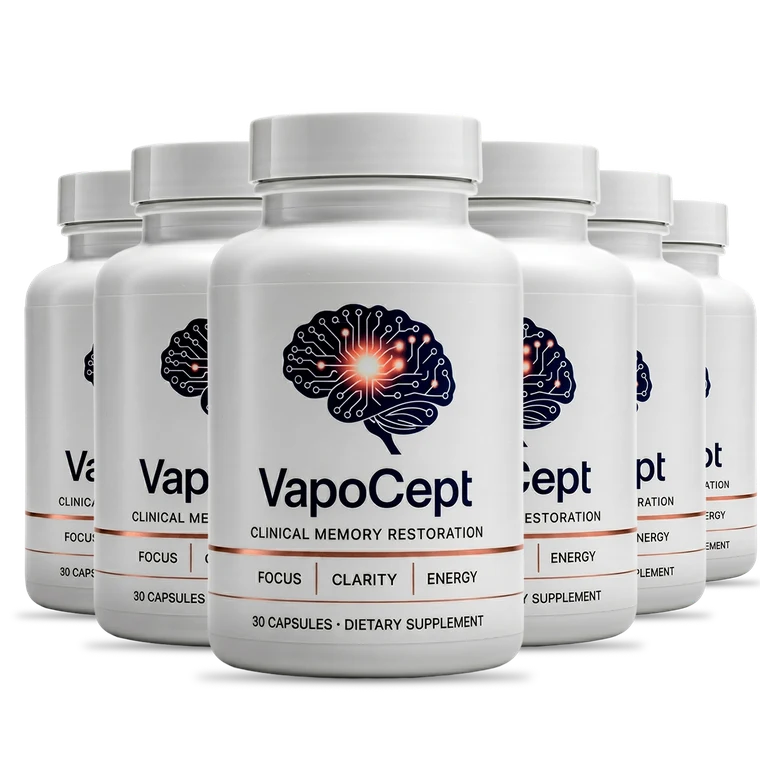
See all six ingredients analysed
Every VapoCept ingredient rated against the published research for its own best-documented use.
Ingredient breakdownThe tingling, and why it matters commercially
Beta-alanine causes paresthesia — a pins-and-needles sensation across the face, neck, scalp and hands, usually starting 15 to 30 minutes after a dose and fading within an hour. It happens because beta-alanine activates sensory neuron receptors. It is harmless and extremely well documented.
It is also a sensation. In a product sold for a subjective outcome like mental clarity, a reliable physical sensation is commercially valuable, because it feels like evidence that something is happening. It is not evidence about the brain.
Note on VapoCept's FAQ. It states that no significant side effects have been reported by users. The formula contains beta-alanine and niacin, whose tingling and flushing effects are among the most predictable in supplement science. Either the doses are very low, or the statement is not accurate.
Should you take beta-alanine?
If you do high-intensity training in the one-to-four-minute range, it is one of the more defensible purchases in sports nutrition. Buy it as a single-ingredient powder, at 3.2 to 6.4 grams daily, split into smaller doses to reduce tingling, and give it four to ten weeks.
If you are buying it for memory or neuroprotection, the evidence is not there, and you would be paying a substantial premium for an undisclosed fraction of an effective dose. See our full ingredient breakdown for how this plays out in VapoCept.
Frequently asked
Is the tingling from beta-alanine dangerous?
No. Paresthesia from beta-alanine is harmless and self-limiting, typically fading within an hour. It can be reduced by splitting the daily amount into smaller doses or using a sustained-release form.
How long does beta-alanine take to work?
For its evidenced purpose — raising muscle carnosine — four to ten weeks of consistent daily intake at 3.2 to 6.4 grams. It is a loading ingredient, not an acute one.
Does beta-alanine help with focus?
There is no established evidence that beta-alanine improves focus or attention. Its documented effects are on muscular performance during high-intensity efforts.