Key points
- Oral arginine is heavily degraded by arginase before reaching circulation
- Citrulline bypasses this and converts to arginine in the kidneys
- Citrulline raises plasma arginine more effectively than arginine itself does
- A formula listing both, plus salt forms of each, is padding an ingredient list
The first-pass problem
L-arginine is the direct substrate for nitric oxide synthase, so it seems like the obvious ingredient. It has a specific problem: the enzyme arginase, present in the gut wall and liver, breaks down a large proportion of swallowed arginine before it reaches systemic circulation.
The practical result is that plasma arginine rises far less than the dose implies, and the increase is short-lived. Trials of oral arginine for endothelial function and performance have been correspondingly inconsistent.
How citrulline solves it
L-citrulline is not a substrate for arginase. It passes through the gut and liver largely intact, reaches the kidneys, and is converted to arginine there — downstream of the enzymes that would have destroyed it.
The counterintuitive result, replicated across studies, is that oral citrulline raises plasma arginine more effectively and more durably than oral arginine does. This is why the sports nutrition industry shifted to citrulline over the past fifteen years.
What about arginine AKG?
AAKG binds arginine to alpha-ketoglutarate. It was heavily marketed in the 2000s on the premise that the bond improves absorption or extends the effect.
Controlled comparisons have generally not found AAKG superior to plain arginine for nitric oxide markers or performance. It remains in formulas largely because it is an established ingredient name that lengthens a label.
Citrulline malate versus citrulline HCl
Citrulline malate binds citrulline to malic acid, typically in a 2:1 ratio. Malate is a citric acid cycle intermediate, and citrulline malate is the form used in most of the exercise-performance literature, at 6 to 8 grams.
Citrulline HCl is citrulline as a hydrochloride salt. Both deliver citrulline; the difference is the counter-ion and the amount of actual citrulline per gram. Neither is dramatically better and both are legitimate.
What is worth noticing is when a product lists both. They are the same active compound. Listing citrulline HCl and citrulline malate as two separate ingredients makes a formula look broader than it is, without adding anything the body distinguishes.
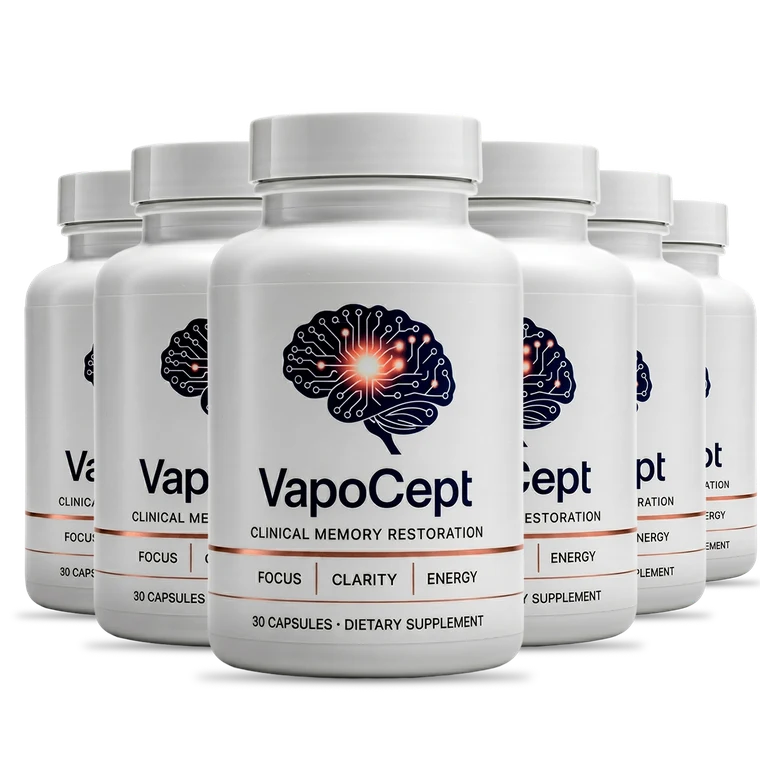
See all six ingredients analysed
Every VapoCept ingredient rated against the published research for its own best-documented use.
Ingredient breakdownReading a label with this knowledge
Apply it to VapoCept. The six ingredients are L-arginine, L-arginine AKG, L-citrulline HCl, L-citrulline malate, niacin and beta-alanine.
Arginine appears twice. Citrulline appears twice. So the six ingredients are, functionally, arginine, citrulline, beta-alanine and a vitamin — four things presented as six. Adding arginine to a formula that already contains citrulline adds little, since citrulline produces arginine more efficiently than arginine does.
This is not deception in a legal sense. The ingredients are genuinely present. But knowing it lets you read the label the way a formulator would.
Practical doses if you want these ingredients
- L-citrulline: 3–6 g daily
- Citrulline malate: 6–8 g, often pre-exercise
- L-arginine: generally not worth it orally given the above
Both are available as single-ingredient powders with the amount printed on the container, at a fraction of what a blended capsule costs. See our pricing comparison.
Frequently asked
Can I take citrulline and arginine together?
You can, but there is limited reason to. Citrulline raises plasma arginine more effectively than arginine itself, so adding arginine contributes little beyond label length.
How much citrulline is in VapoCept?
Unknown. The manufacturer publishes no amounts for any ingredient. Given a single daily capsule holding roughly 500 to 800 mg total across six ingredients, it is necessarily well below the 3 to 6 gram doses used in research.
Is citrulline safe daily?
Citrulline is generally well tolerated at typical supplemental doses in healthy adults. It should not be combined casually with nitrates or PDE5 inhibitors. Check with a pharmacist if you take cardiovascular medication.