Key points
- Pro: all six ingredients are named rather than hidden in a blend
- Pro: one capsule daily is realistic and there is no autoship
- Con: four of six ingredients have no cognitive evidence
- Con: no amounts are disclosed for anything
The case in favour
All six ingredients are named
Plenty of competitors hide everything behind a blend name. VapoCept lists each compound, which lets you research them. That is genuinely better than the category norm and it deserves acknowledgement.
Three ingredients have real literature
Citrulline, citrulline malate and beta-alanine are among the best-evidenced supplement ingredients in existence. That evidence concerns blood flow and exercise performance rather than memory, but these are not invented compounds.
One capsule daily
Adherence is where most supplement regimens fail. A single morning capsule is realistic.
No subscription
A one-time purchase with no autoship. In direct-response supplements, where forced continuity billing is common, this is worth noting.
A guarantee that exists
Sixty days, with a named support contact. Conditions apply, but the policy is published rather than absent.
The case against
The category is wrong
This is a nitric oxide amino acid stack — the standard pre-workout and blood-flow formula — sold as a memory supplement. Four of the six ingredients have no cognitive evidence at all.
No amounts disclosed
Not on the page, not in the FAQ, not as a label image. You cannot compare an undisclosed amount to a research dose, which makes independent assessment impossible by design.
Six ingredients are really four
Arginine appears as arginine and arginine AKG. Citrulline appears as citrulline HCl and citrulline malate. The label looks broader than the formula is.
Disease-claim language
'Clinical Memory Restoration' on the bottle, and 'directly targets the real causes of memory loss' on the page. Supplements may not claim to treat or reverse conditions.
A false regulatory badge
'FDA APPROVED' on a dietary supplement is not a true statement.
Compressed refund window
Sixty days from purchase, minus shipping, minus a 30-day minimum use requirement.
Pressure tactics
A countdown timer that resets on reload, and a claim that 96% of customers choose the largest bundle.
Price
$49–$79 monthly for undisclosed amounts of commodity amino acids available in bulk for a fraction of that.
Who it might suit
Someone who wants a convenient low-dose nitric oxide capsule, understands it is not a nootropic, takes no cardiovascular medication, and does not mind that the amounts are unknown. That is a narrow group, and most of them would be better served by a disclosed-dose citrulline powder.
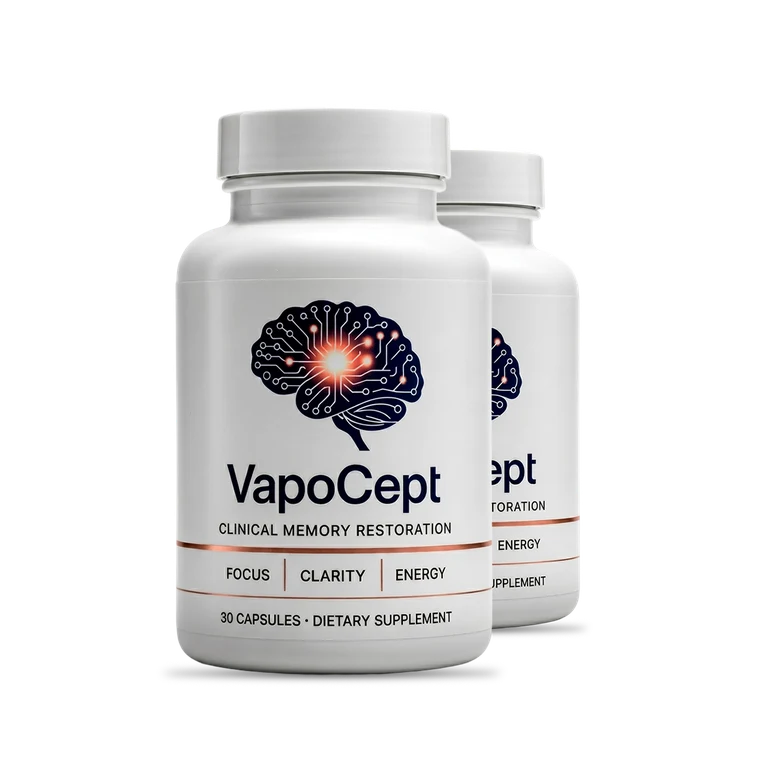
Read the full VapoCept review
Our verdict is 2.5/5 — real ingredients, wrong category, undisclosed doses. Here is the reasoning.
Read the reviewWho should avoid it
Anyone buying it because of memory changes — see a doctor first, since several causes are reversible. Anyone taking nitrates, PDE5 inhibitors or blood pressure medication without a pharmacist check. Anyone who would feel the loss of $294 if the refund proved awkward.
Read the full ingredient analysis →
The balance
The pros are about presentation and convenience. The cons are about whether the product can do what it is sold to do. Those are not equally weighted, which is why our overall rating is 2.5 out of 5 despite a genuine list of positives.
Frequently asked
Is VapoCept worth the money?
For memory support, no — the evidence does not support the claims. As a low-dose nitric oxide capsule it is expensive relative to disclosed-dose single-ingredient powders.
What is the biggest problem with VapoCept?
That the formula is a blood-flow and exercise stack sold against cognitive claims its ingredients do not support, with no amounts published to assess.