Key points
- Naming ingredients without amounts is legal but uninformative
- It prevents any comparison to the doses used in research
- Fairy dusting means including a trace amount for label appeal
- You can email and ask; the answer, or lack of one, is informative
What disclosure is supposed to do
A Supplement Facts panel exists so buyers can compare a product to the evidence. If research shows an effect at 3 grams and the product contains 50 milligrams, you know before buying that the research does not apply.
Remove the amounts and that comparison becomes impossible. You are left with a list of names, which is exactly as informative as a restaurant listing ingredients without portions.
Proprietary blends and the loophole
US regulations permit a proprietary blend to be listed with a total weight rather than a breakdown per ingredient. The stated rationale is protecting formulation from competitors.
In practice it lets a manufacturer put most of the blend weight into the cheapest ingredient and a trace of the expensive, well-marketed one. The label looks identical either way.
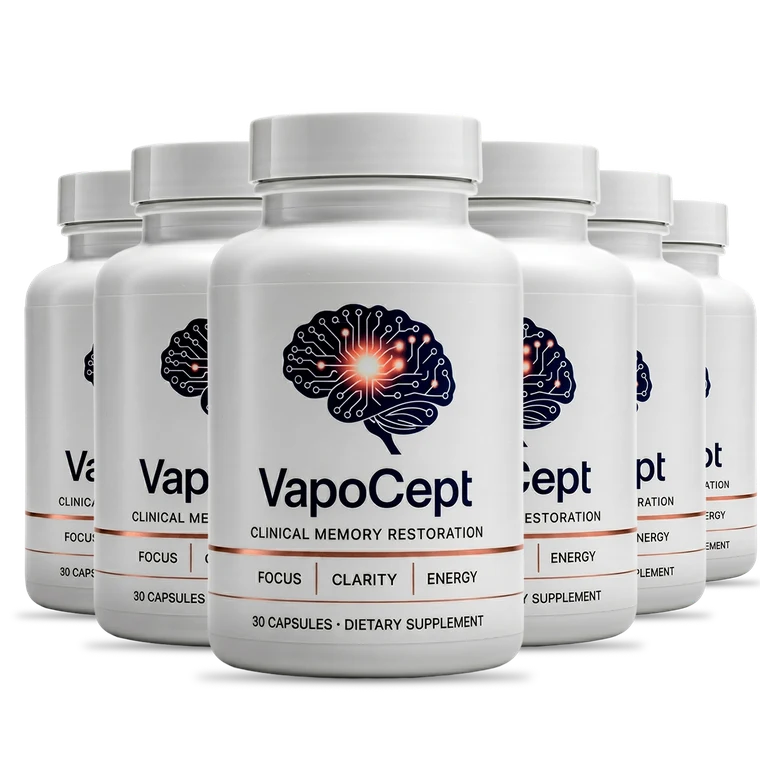
Some products go further and publish no total at all — just names. That is the situation with VapoCept: six ingredients listed, no amounts, no blend total, no Supplement Facts image anywhere on the product page.
Fairy dusting
The industry term for including an ingredient at a token amount purely so it can appear on the label. The ingredient is genuinely present, so no false statement is made. It is simply present at a level that cannot do anything.
Non-disclosure and fairy dusting go together, because the practice is only viable if nobody can see the number.
The capsule arithmetic anyone can do
You do not need the label to set an upper bound. A size 0 vegetable capsule holds roughly 500 to 800 mg of powdered material. That is a physical constraint.
So for any single-capsule product, the total of all ingredients cannot exceed roughly 800 mg. If the formula has six ingredients and two of them have research doses of 3 to 6 grams each, the maths is settled before you read a single study.
Worked example. VapoCept contains citrulline (research dose 3–6 g), citrulline malate (6–8 g) and beta-alanine (3.2–6.4 g), among others, in one daily capsule. Those three alone would require 12 to 20 grams — roughly 15 to 25 capsules.
See all six ingredients analysed
Every VapoCept ingredient rated against the published research for its own best-documented use.
Ingredient breakdownWhat to do about it
- Email and ask for the panel. Ask for amounts in milligrams for each ingredient. A manufacturer confident in its formulation will send it. A refusal, or a reply about proprietary protection, is itself an answer.
- Check for third-party testing. NSF Certified for Sport, Informed Choice and USP verification all involve independent analysis. Their absence is common; their presence is meaningful.
- Count the ingredients against the format. More ingredients in a single capsule means less of each. A long list is a warning, not a feature.
- Consider single-ingredient alternatives. Bulk powders of citrulline or beta-alanine state the dose on the container and cost a fraction of a blended capsule.
The reasonable counter-argument
To be fair to manufacturers: formulation genuinely does represent investment, and competitors do copy labels. That argument has some force.
It has less force when the ingredients are commodity amino acids available anywhere, as here. There is no proprietary insight in combining arginine, citrulline and beta-alanine — it is the most common stack in the industry. What non-disclosure protects in that case is not the formula.
Frequently asked
Is it legal to sell a supplement without disclosing doses?
In the US, proprietary blends may be listed with a total weight rather than per-ingredient amounts. Publishing no amounts at all is outside normal labelling practice for a Supplement Facts panel, though marketing pages are not the label itself.
How do I find out what is in a supplement?
Email the manufacturer and request the Supplement Facts panel with milligram amounts. Check whether the product carries third-party certification. Look for an image of the actual bottle label rather than marketing copy.
Does VapoCept disclose its doses?
No. As checked in August 2026, the official product page names six ingredients and publishes no amounts, no blend total and no Supplement Facts panel.